🏛 Heritage of Malda
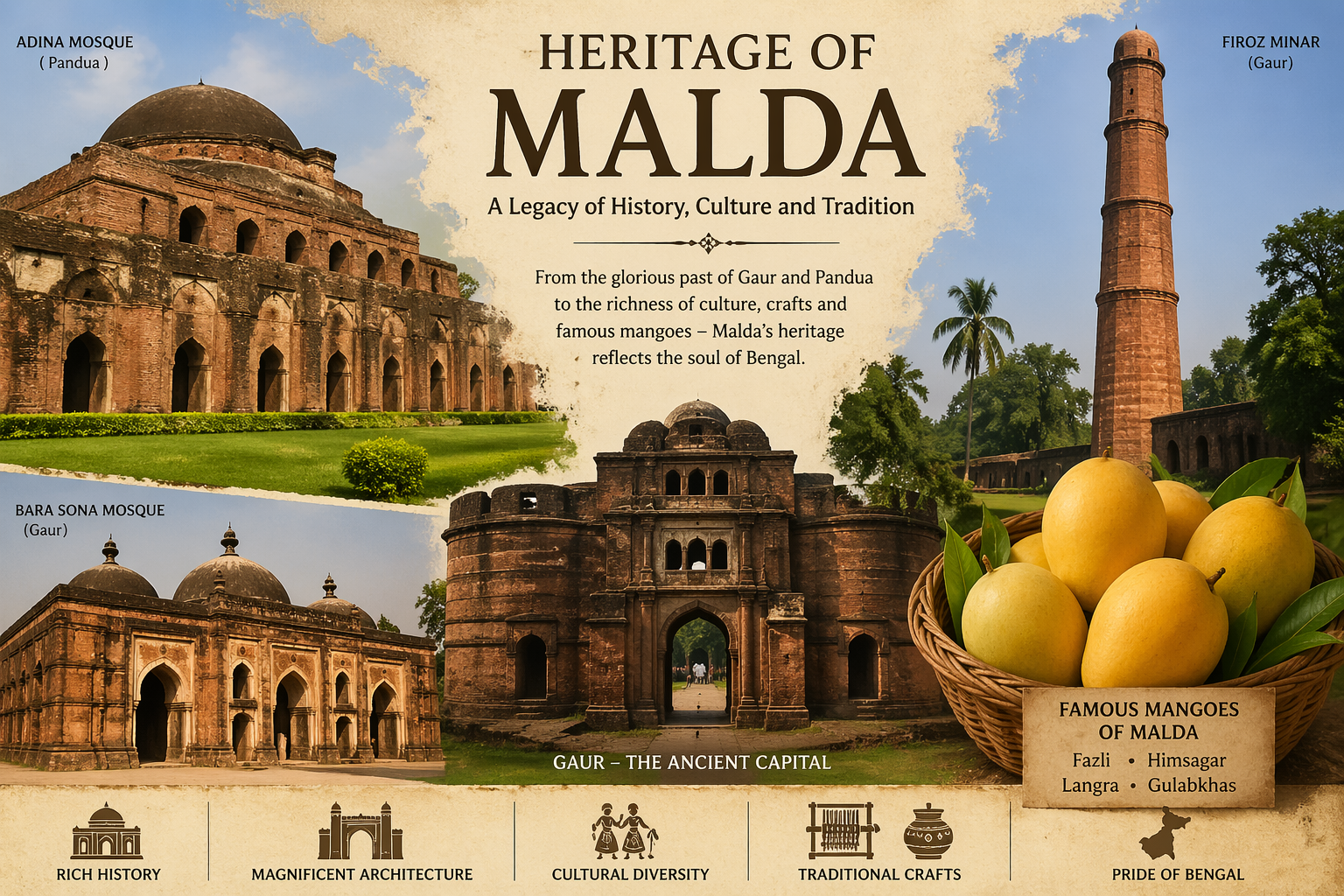
Malda, located in the Indian state of West Bengal, is a region rich in historical and cultural heritage, often referred to as the “Gateway to North Bengal.” Its legacy dates back to ancient and medieval periods when it served as a prominent center of power, trade, and learning. The district was once part of the great kingdoms of Gaur and Pandua, both of which were flourishing capitals of Bengal during the Sultanate and Mughal eras. These cities are adorned with magnificent architectural remains such as the Bara Sona Mosque, Adina Mosque—one of the largest mosques in India—and the iconic Firoz Minar, reflecting the grandeur of Indo-Islamic architecture. Malda was also an important hub for silk production and trade, contributing to its economic significance. In addition to its architectural heritage, the region is known for its cultural diversity, traditional crafts, and famous mango varieties like “Fazli” and “Himsagar.” Together, these elements make Malda a vibrant repository of Bengal’s rich historical and cultural traditions.
Culture & Traditions
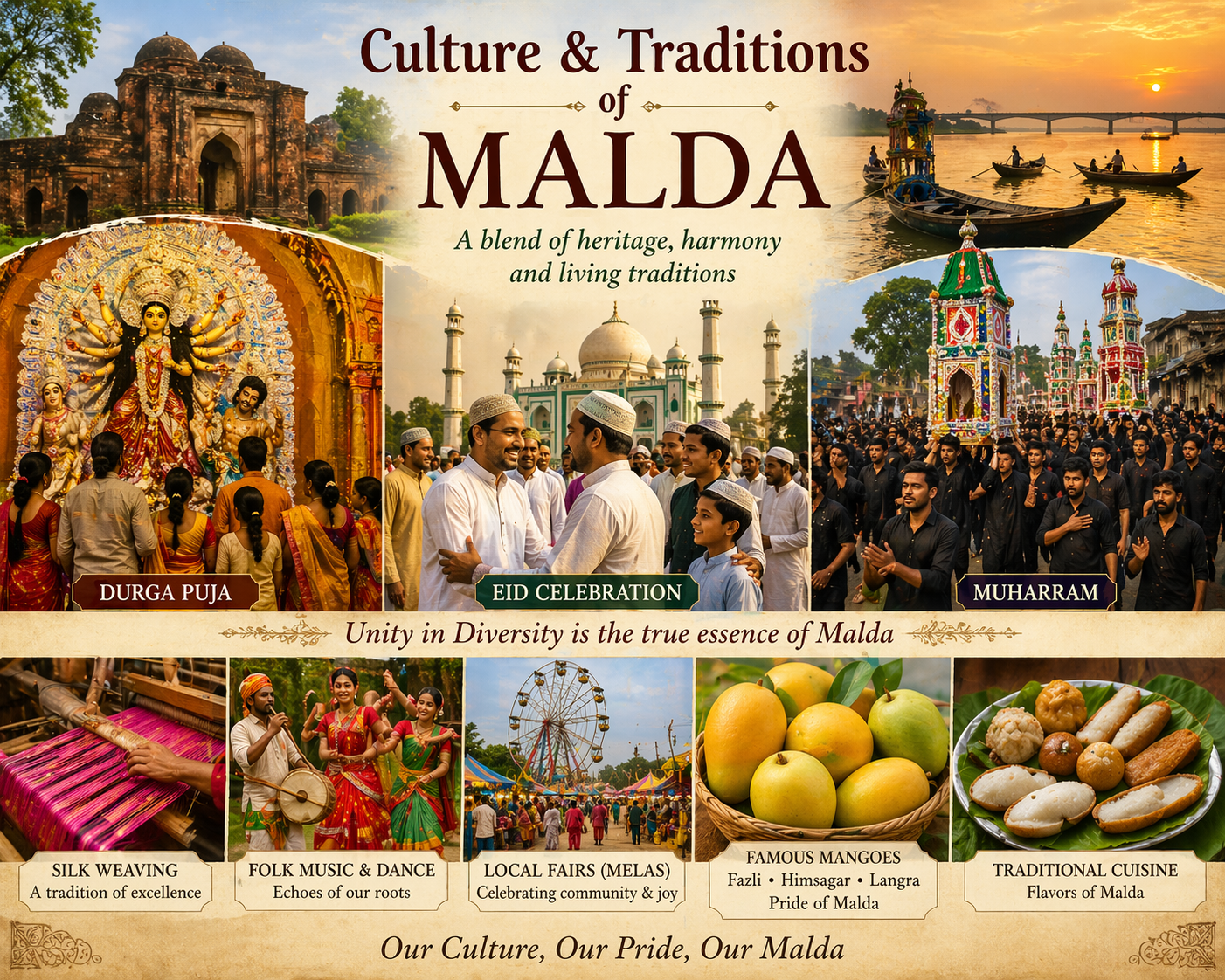
The culture and traditions of Malda reflect a rich blend of history, religion, and rural life shaped over centuries. Located in West Bengal, Malda carries the legacy of ancient capitals like Gaur and Pandua, which influenced its diverse cultural fabric. The region is known for its harmonious coexistence of different communities, where Hindu and Muslim traditions are deeply interwoven. Festivals such as Durga Puja, Eid, and Muharram are celebrated with equal enthusiasm, showcasing a spirit of unity and shared heritage. Folk music, traditional dances, and local fairs play an important role in preserving the district’s vibrant cultural identity. Malda is also renowned for its historical heritage, including the ancient cities of Gaur and Pandua, which contain beautiful mosques and monuments. Traditional silk weaving, local crafts, and the world-famous Fazli mangoes are important parts of the region’s cultural identity.
Literacy In Malda
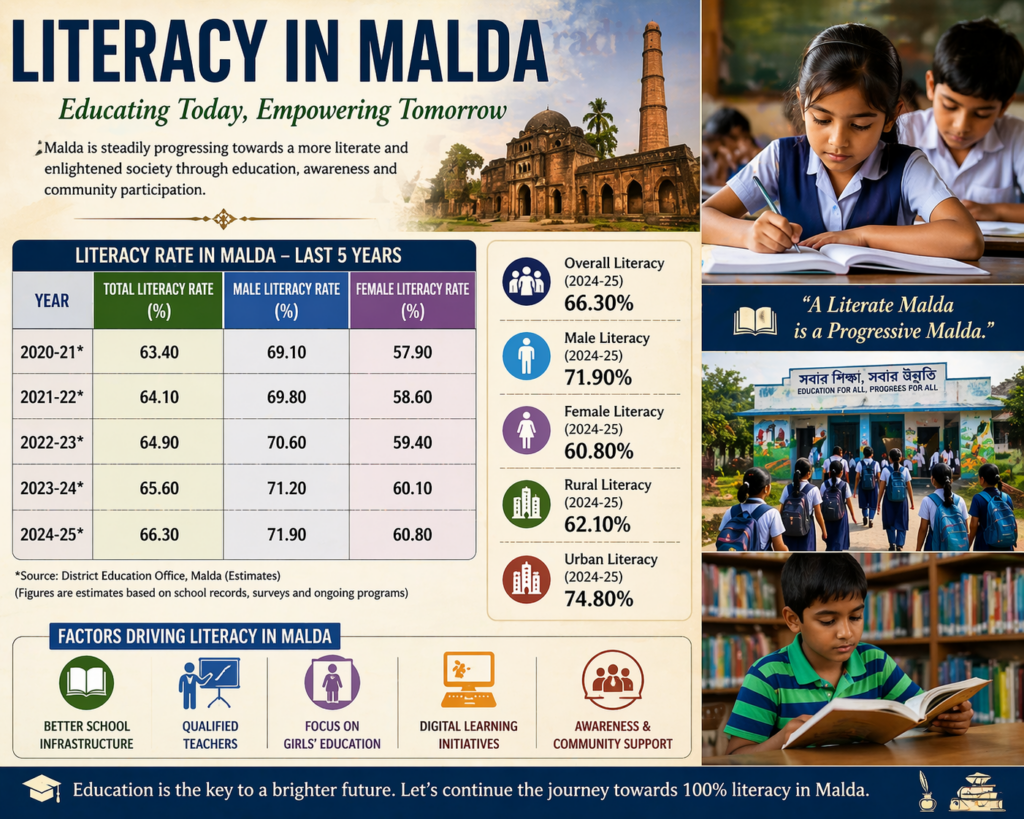
In the absence of fresh census data, recent years (2021–2025) are generally understood as a gradual improvement phase due to government education programs, digital learning, and school enrollment drives. Estimates and academic studies suggest that literacy in Malda has likely increased slowly to around 65–68% in recent years, though exact yearly percentages are not officially confirmed. This improvement is mainly driven by better access to primary education and awareness, but challenges such as poverty, migration, and rural backwardness still affect educational growth. The district has many primary and secondary schools, colleges, and educational institutions that help spread awareness and learning. Government programs and social initiatives have also played an important role in increasing literacy and encouraging children to attend school regularly.
92%
Urban Connectivity
Malda railway and road networks make it one of the best-connected cities in the region.
88%
Cultural Participation
Festivals and traditions remain a strong part of community life across the city.
82%
Infrastructure Growth
Continuous smart city improvements are transforming Malda into a modern urban center.
Tourism In Malda
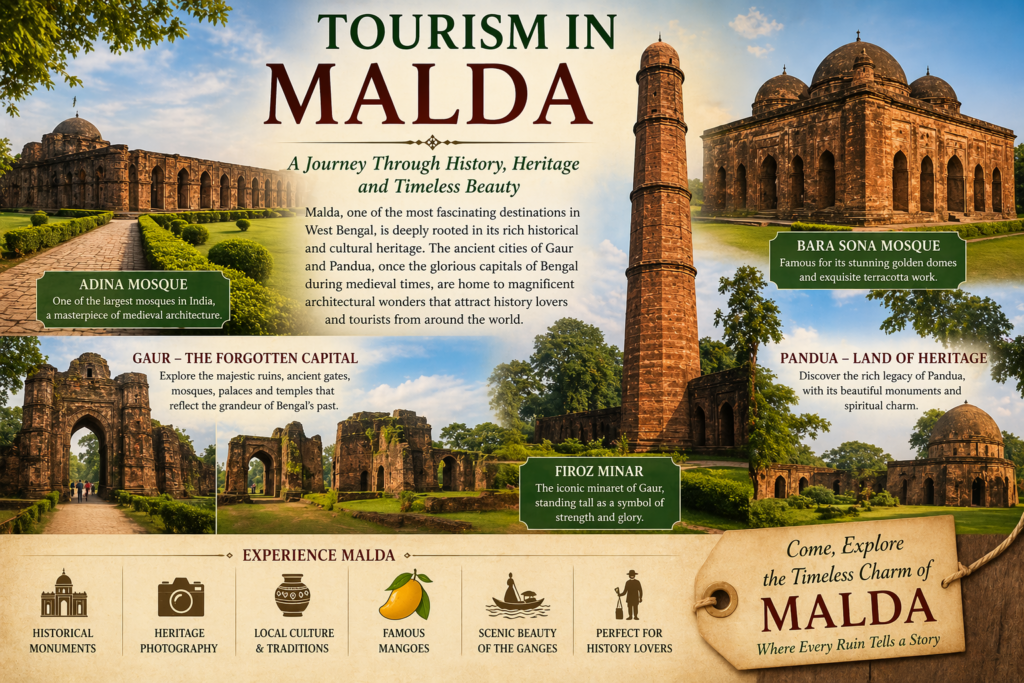
Tourism in Malda is deeply rooted in its rich historical and cultural heritage, making it one of the most fascinating destinations in West Bengal. The district is especially known for the ancient cities of Gaur and Pandua, which once served as the capital of Bengal during medieval times. These places are filled with remarkable architectural ruins that attract history lovers and tourists alike. Landmarks such as the Adina Mosque—one of the largest mosques in India—the Bara Sona Mosque, and the tall Firoz Minar stand as magnificent reminders of the region’s glorious past and showcase stunning Indo-Islamic architecture. These sites reflect the rich Islamic and medieval history of the region. Malda is also known for its beautiful mango orchards, especially the famous Fazli mangoes, which attract tourists during the summer season.
Travel Options to 🕹 Malda
By Train
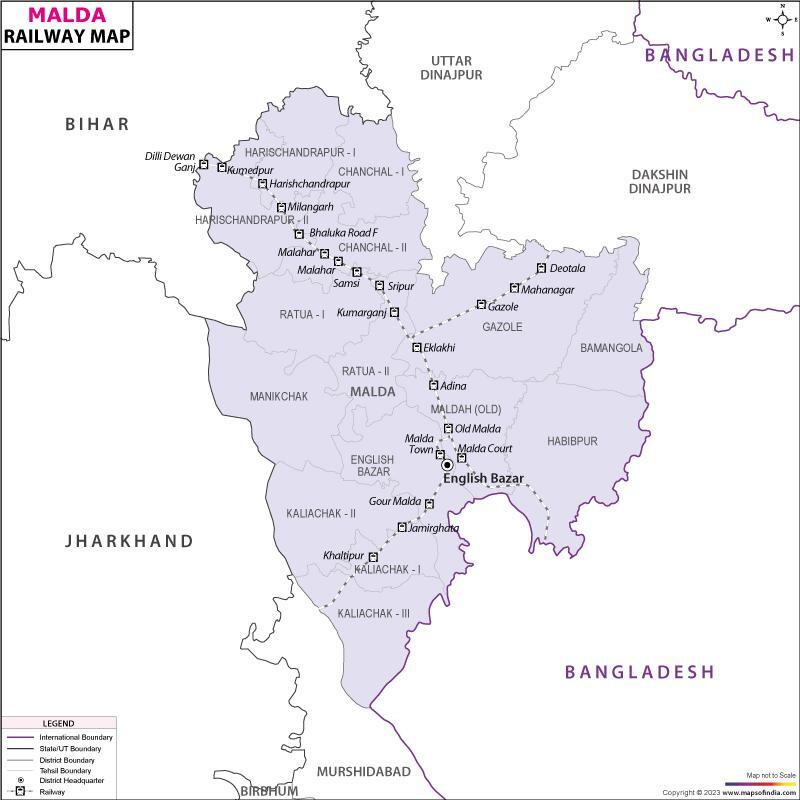
Malda Town railway station (MLDT) is one of the most important railway hubs in Eastern India, serving as a key link between South Bengal, North Bengal, Bihar, and the Northeast.
By Air
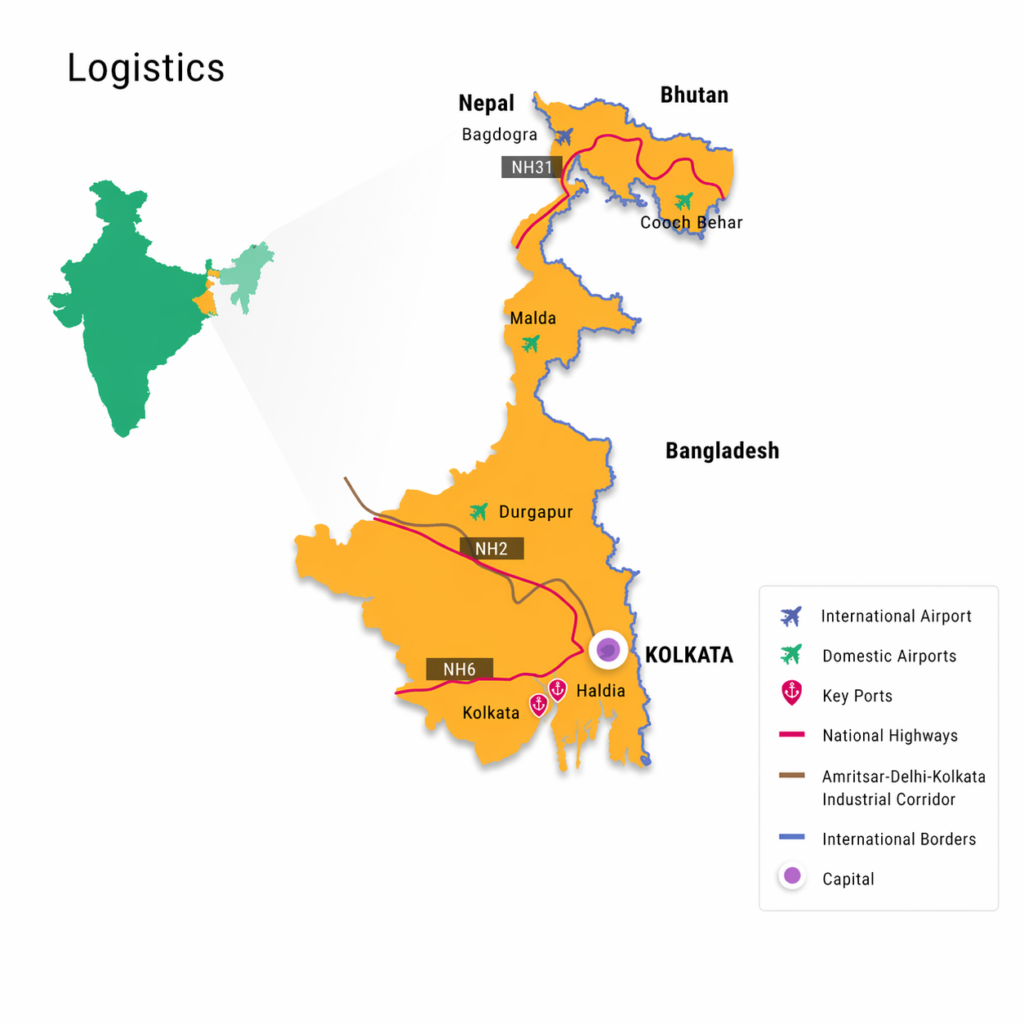
Air connectivity in Malda is very limited, as the district does not currently have a functional commercial airport. Travelers rely on nearby airports for domestic and international flights.
By Road
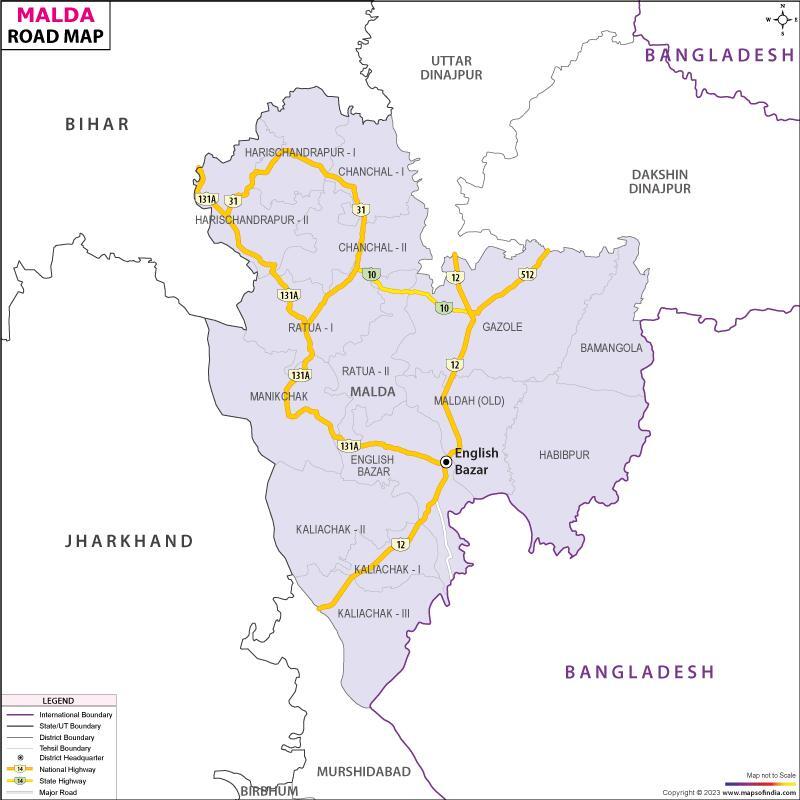
Malda is well connected by road through a strong network of national highways and state roads, making it an important gateway to North Bengal and the northeastern region of India.
Malda Climate & Seasons
Summer
March – June 28°C – 40°C
Monsoon
June – September 24°C – 32°C
Winter
October – February 12°C – 25°C
Why You Should Visit Malda...
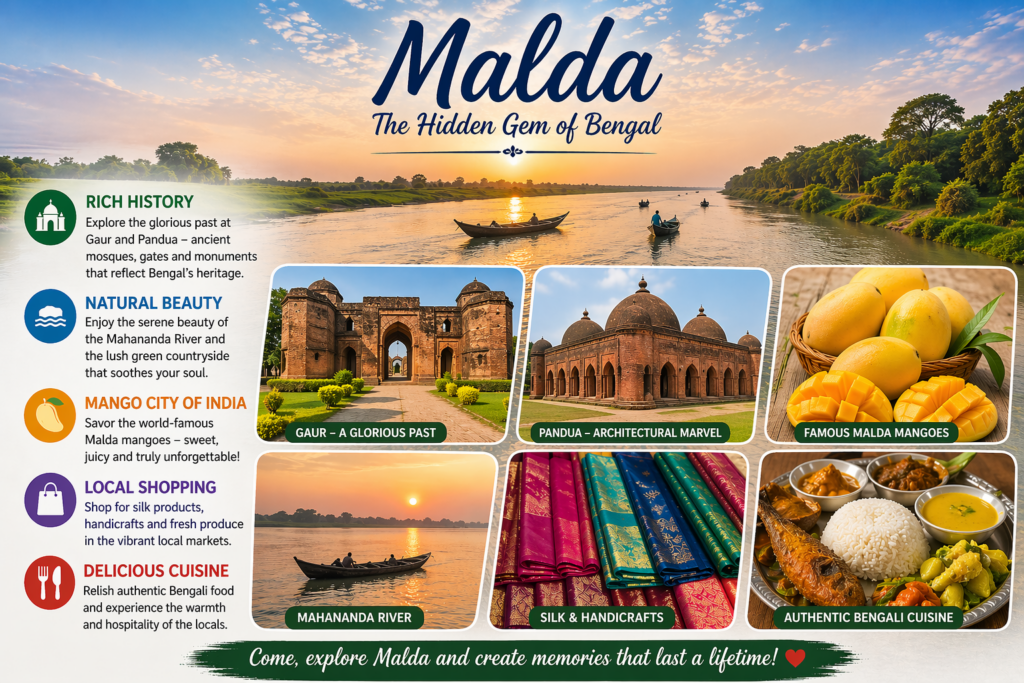
Malda is a hidden gem in eastern India that offers a rich blend of history, culture, and natural beauty. Often called the “Mango City of India,” it is famous for its delicious varieties of mangoes, especially during summer, making it a paradise for fruit lovers.
One of the biggest reasons to visit Malda is its historical importance. The nearby ruins of Gaur and Pandua showcase ancient mosques, gateways, and monuments that reflect the grandeur of Bengal’s medieval past. These places are perfect for history enthusiasts and photographers.
Nature lovers can enjoy the scenic beauty of the Mahananda River and the peaceful countryside surrounding the town. The warm hospitality of locals and the authentic Bengali cuisine add to the charm of the visit.
Shopping in local markets is another attraction, where visitors can buy silk products, handicrafts, and fresh produce. The district is also known for its silk industry, making it a great place to explore traditional craftsmanship.
Whether you enjoy history, food, culture, or quiet travel destinations, Malda offers a unique and memorable experience away from crowded tourist spots.